

Synthesis centres represent a relatively unusual way of doing science. Could you explain what a synthesis centre is?
As the name „synthesis centre“ suggests, the work that goes on in a synthesis centre focuses on research that synthesizes current knowledge and data in new ways to gain scientific insight. This means that no new data are collected at a synthesis centre but instead, existing data and knowledge are compiled to answer important questions. Another thing that is emphasized at synthesis centre is interdisciplinarity – by encouraging scientists from varying backgrounds to work together, interdisciplinary research can provide novel insight into old problems.
Could you describe it in more detail?
The key instrument of synthesis centre is the hosting of working groups, composed of scientists and sometimes practitioners or policymakers from various outside institutioins. Typically, these groups of 5-15 participants come together at the centre for 4-5 days and brainstorm solutions to problems. The emphasis at a synthesis centre is on interdisciplinary collaboration and emphasizes compiling and analyzing existing knowledge and data rather than collecting new data.
In which scientific fields can a synthesis centre be an ideal research model?
In theory, the synthesis centre concept can be applied to any scientific discipline but historically it has been used to answer ecological and/or environmental questions. Very often, their work focuses on „actional outcomes“ – i.e. producing knowledge that can be applied to solve real world problems. The problem of biological invasions is an environmental problem being faced in virtually every part of the world and as such, I believe that the synthesis centre model can contribute a lot to finding solutions to this problém.
How widespread are synthesis centres worldwide, and where are they most prominent today?
The concept started in the US (at the National Center for Ecologica and Analysis at the University of California Santa Barbara) but it has now been adopted at institutions around the world (e.g., in Europe, Brasil, South Africa, etc.)
At what point did the idea emerge to establish a synthesis centre specifically focused on forest invasions?
The idea came to me because of my own positive experiences working at synthesis centres (NCEAS, NimBios, MBI, SESYNC, Powell Center) I was able to experience the power of the concept. Because I have worked my entire career on the problem of biological invasions in forests, it was an obvious idea to apply the synthesis centre model to the problem of biological invasions in forests.
Where would you like to position FISC among other synthesis centres?
I think that compared to most other synthesis centres, FISC is more focused in its subject matter. But several other synthesis centres also focus on topics that include biological invasions so I think that there may be opportunities for collaborating with other synthesis centres on joint projects.
What is your vision for FISC in the coming years, and what would you consider a major success for the centre?
I think that the biggest challenge that FISC has is to continue our work beyonnd the 5 years of our current funding. That would be a success. But of course, I also hope that we can accomplish high-impact research that has applied value – that is another measure of our success.
What would you like to bring to the university as a whole?
Of course FISC represents a tiny fraction of the CZU research program but I feel like we may have some practices that might be applied elsewhere at CZU. The synthesis centre approach could easily be applied to other subjects related to agricultural research. I also hope that the emphasis on interdisciplinarity and trans-european mobility might „rub-off“ on other CZU research projects.
What opportunities does FISC offer to researchers — both within the university and beyond — who may not work directly on forest invasions but are interested in synthesis-based collaboration?
At FISC we encourage CZU and elsewhere in the EU widening countries to participate in the centre by organizing or participating in working groups. I also encourage others at CZU to learn about the power of socio-environmental synthesis research.
If the idea of synthesis centres resonates with researchers in other fields who may be considering establishing a similar centre, what advice would you give them based on your experience?
I think that the greatest challenge for starting a synthesis centre is funding. We were successful in finding funding via the Horizon Europe ERA Chair Program but there might be other avenues for support.
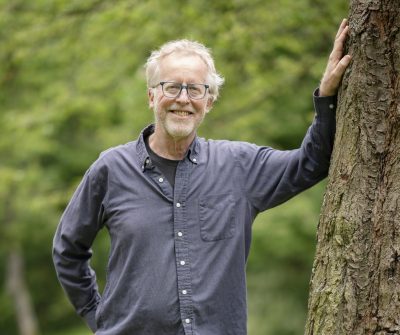
- Forest entomologist, specialist in biological invasions across forest ecosystems
- PhD, Entomology, University of California, Berkeley, 1984
- Postdoctoral, University of Massachusetts, USA, 1984-1988
- 1988-2024: Research Entomologist with the USDA Forest Service
- Chief Scientist of the Forest Invasion Synthesis Centre, Prague (FISC)
Project HIVE 101187384. Funded by the European Union. Views and opinions expressed are however those of the author(s) only and do not necessarily reflect those of the European Union or the European Research Executive Agency. Neither the European Union nor the granting authority can be held responsible for them.