

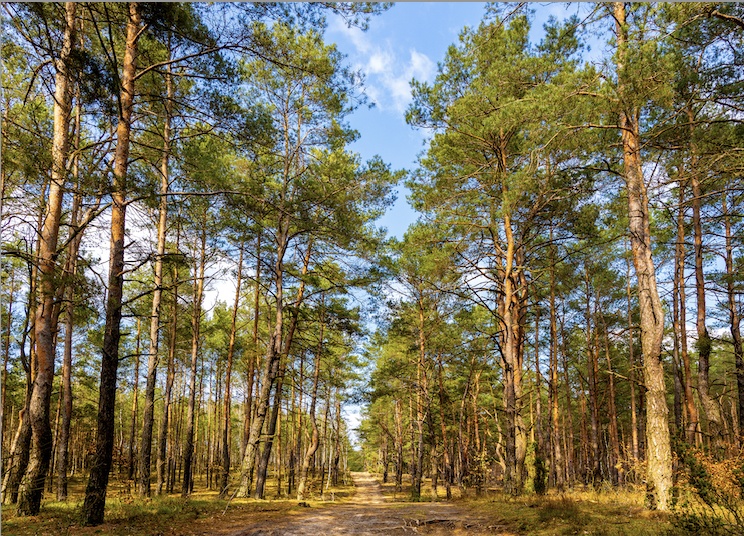
In early November 2025, French authorities officially confirmed the first occurrence of the pinewood nematode (PWN) in France. The infestation was identified at the southern margin of the Landes Forest, the largest planted pine forest in Europe, dominated by maritime pine (Pinus pinaster), one of the most susceptible European pine species.
Following the detection, a demarcated area was rapidly established in accordance with European phytosanitary regulations. This includes a strictly delimited infested zone surrounding the affected trees and a wider buffer zone with movement restrictions on wood and forest operations. The infested area is being clear-cut as part of mandatory eradication measures, while enhanced surveillance is underway across the surrounding landscape.
Within the buffer zone, which encompasses extensive maritime pine plantations, monitoring efforts have been substantially intensified. Forest management activities and timber transport are subject to strict authorisation, reflecting concerns about potential long-distance spread mediated by insect vectors and human activities.
French research teams involved in the FORSAID project are currently conducting targeted fieldwork in the affected region. Their work focuses on advancing early detection and surveillance approaches, including environmental DNA analysis, remote sensing combined with artificial intelligence, and modelling of insect vector dispersal. These efforts aim to improve preparedness and response capacities for future incursions across Europe.
The pest behind pine wilt disease
Pine wilt disease is a rapidly progressing and often lethal condition of pine trees caused by the pinewood nematode (Bursaphelenchus xylophilus). The nematode is transmitted by sawyer beetles of the genus Monochamus, which introduce it into healthy trees during feeding or oviposition.
Once inside the host, the nematodes multiply quickly and disrupt water transport within the tree. This leads to rapid needle discolouration, wilting and, in many cases, tree death within weeks to months.
The disease affects a wide range of pine species, with particularly high susceptibility observed in Scots pine (Pinus sylvestris), Austrian pine (Pinus nigra) and Japanese black pine (Pinus thunbergii).
Effective management relies on early detection, prompt removal and destruction of infected material, and strict control of wood movement to prevent further spread.
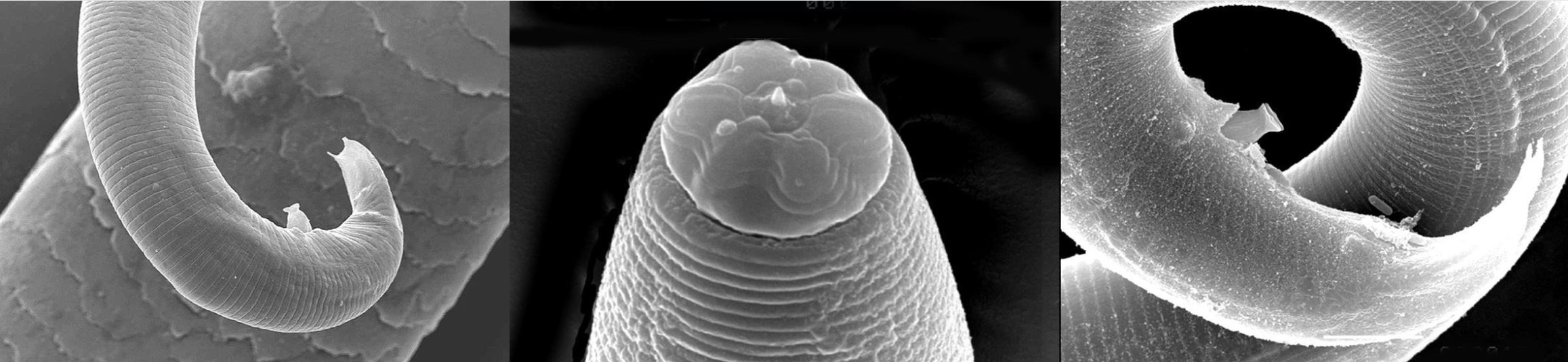
Scanning electron micrograph of the posterior and anterior end of Bursaphelenchus xylophilous. Photo: Mactode Publications, Mactode Publications, Bugwood.org
Project HIVE 101187384. Funded by the European Union. Views and opinions expressed are however those of the author(s) only and do not necessarily reflect those of the European Union or the European Research Executive Agency. Neither the European Union nor the granting authority can be held responsible for them.