

You are a young scientist and a mother of a small son. How do you balance your scientific work and family life?
Since my research does not primarily depend on hours spent in the laboratory or in the field, but rather on computer-based work, working from home when necessary has been much easier for me. This has been especially helpful when my son is ill or when childcare was not yet available. I have also always found understanding and support at work, and my husband shares in caring for our son.
I believe that a supportive professional environment, together with the involvement of other family members, is essential for maintaining at least partial engagement in one’s career.
Do you ever find it difficult to balance these two roles?
Naturally, I sometimes struggle with feelings of guilt and with questioning whether I am fulfilling either role adequately. At the same time, when my work does not progress as I would wish, it does not affect me too deeply, because I know that what matters most is my son.
Conversely, when I feel overwhelmed by household responsibilities and the intensity of my almost three-year-old child, I look forward to returning to the office and focusing on work that I find meaningful and enjoyable.
Returning to work after parental leave can be challenging. What was the most difficult part for you?
Since I was completing my Master’s degree during maternity leave and then moved directly on to a PhD, my period of being solely on maternity leave was not particularly long. During the first year of my PhD, I spent more time at home, but this year my son has started attending the university nursery, which allows me to be at work every day. However, I believe that after three or four years of maternity leave – or especially in the case of two children, when the interruption may extend to as long as five, six years – returning to work must be extremely challenging.
What could be improved in academia to make it easier for parents of young children to pursue a scientific career?
I am not sure whether this is specifically an issue of the academic environment, but I do think it would be worth reconsidering whether a three-year maternity leave should truly be regarded as the norm. It is valuable to have that option, but it should also be acceptable not to use it fully.
According to surveys, many mothers would like to return to work – at least part-time – before three years have passed. However, there is a lack of accessible childcare, sufficient family support, and flexible part-time positions.
Is academia already better positioned than other sectors in this regard?
In some respects, academia is comparatively well positioned when it comes to flexibility and balancing work and family life. Still, challenges remain – such as age limits for grants, publication gaps viewed negatively, or persistent stereotypes and condescension.
Even so, based on my positive experience at CZU, I believe it is possible to pursue academic work and professional fulfilment even as a mother on maternity leave.
Do you see any examples of support for parents in science abroad that could be applied in the Czech academic environment?
Again, I don’t think we need to limit the discussion to the academic environment; it is important to consider the broader approach to parenthood. In this regard, we could take inspiration from Scandinavia and provide more support for fathers in caring for their children. I believe that if parental leave were shared equally between both parents, we would no longer have to talk about a child being an obstacle to a career, or the caregiving parent being viewed as less promising or employable, and similar biases would be greatly reduced.
Your research focuses on the genetic aspects of biological invasions. Why is the genetic perspective so important for understanding invasive species?
What I find particularly compelling about the genetic aspects of biological invasions is the apparent paradox: populations that successfully resist diseases, environmental changes, and adapt typically exhibit high genetic diversity. While exceptions exist, higher diversity generally correlates with greater fitness.
Yet invasive founders often arrive at low densities in novel environments. As a result, they are expected to have reduced genetic diversity, a higher risk of inbreeding depression, and lower adaptive potential. Yet many of them still establish, spread, and succeed. How is that possible? And why do some succeed while others do not? This phenomenon is known as the genetic paradox of invasions, and I think it is a topic that deserves much more exploration.
At FISC, you study the relationship between herbivory and phylogenetic distance. Could you briefly explain what this means and why it matters for invasion research?
In our research, we are interested in whether the level of herbivory is related to how evolutionarily close or distant a plant species is from the native flora. Phylogenetic distance essentially reflects how closely related species are in evolutionary terms.
Our hypothesis is that the greater the phylogenetic distance between a non-native species and the local flora, the lower the level of herbivory it should experience. This is because local herbivores are typically adapted to plant groups with which they share an evolutionary history. If a newly introduced species is evolutionarily very distinct, it may be less recognizable, less attractive, or simply harder for local herbivores to exploit. This is particularly relevant in invasion biology because it may help explain why some non-native species escape pressure from natural enemies and therefore have a greater chance of establishing and spreading successfully in a new environment.

What questions are you trying to answer with this approach? Is it part of a broader research project?
With this approach, we aim to better understand the role of evolutionary relationships between plants in shaping interactions with herbivores, and whether these relationships can help explain the invasion success of some non-native species. More specifically, we are interested in whether phylogenetic distance from the native flora influences the level of herbivore damage, and therefore whether it may help explain patterns predicted by the enemy release hypothesis.
More broadly, this work is part of a wider research framework focused on the ecological and evolutionary mechanisms underlying plant invasions, particularly the role of interactions with local organisms in determining the success of non-native species in a new range.
What methodological challenges do you face? Can different analytical approaches lead to different interpretations of the results? How do you address this?
As with most studies based on complex ecological datasets, the results can be quite sensitive to the analytical choices we make. When working with many variables, species, and interacting processes, the choice of statistical approach can strongly influence which patterns emerge from the data and how we ultimately interpret them.
One of the main methodological challenges is therefore finding a balance between an interpretation that is scientifically interesting and biologically meaningful, while still remaining as faithful as possible to what the data actually support. Data do not speak entirely for themselves, but at the same time, it is important to be cautious not to overfit the analysis to a preferred narrative or hypothesis.
To address this, we try to approach the data from multiple analytical angles, compare alternative models, and assess whether our conclusions remain robust across different methodological choices. In my view, this kind of caution is crucial to ensure that the resulting interpretation is not only interesting but also as reliable as possible.
Do you have any personal goal in science – something you would like to achieve?
I don’t have a specific personal goal in science; what I enjoy most is exploring questions, solving puzzles, and uncovering patterns in data – the process itself is what science is really about for me. I don’t have a single “big question” I want to answer, but I enjoy the creative process of discovery and analysis. One small dream of mine is to see changes in the academic publishing system.
What would you like to see change in the academic publishing system?
Currently, researchers do the work: they design studies, conduct experiments, and write papers, often funded by universities, grants, or taxpayers. Peer reviewers check the quality of the work for free. Publishers, on the other hand, manage and distribute journals, often making enormous profits. The biggest publishers generate profit margins above 30–40%, while universities, taxpayers, and sometimes authors pay the bill. Individuals without institutional access often have to pay $30–$50 per article. Crazy.
Many critics see this as a form of exploitation: researchers contribute and review for free, yet access is behind paywalls, and publishers reap huge profits. Some call it a “double-dipping” model because institutions pay for subscriptions and sometimes also for open-access fees. I would love to see a shift toward a system that is more open, fair, and accessible, where the focus is truly on knowledge sharing rather than profit.
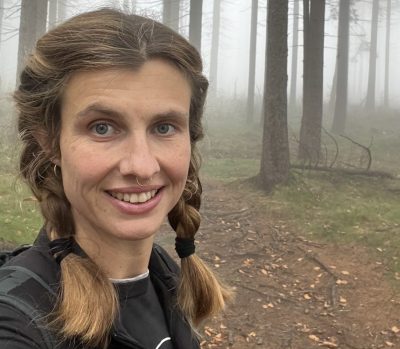
- PhD student at FISC
- examines how phylogenetic distance relates to herbivory on non-native trees.
Project HIVE 101187384. Funded by the European Union. Views and opinions expressed are however those of the author(s) only and do not necessarily reflect those of the European Union or the European Research Executive Agency. Neither the European Union nor the granting authority can be held responsible for them.