

Skip to content

Emerald ash borer confirmed in Hungary, suspected in Slovakia

3 min read
The emerald ash borer (EAB), Agrilus planipennis, is the most destructive forest pest to have invaded North America this century and now has been discovered for the first time in the European Union. It is expected to cause widespread and rapid death of ash trees (Fraxinus spp.) in both natural and urban European forests.

The first confirmed detection of EAB has been reported from Hungary. Slovakia has subsequently notified a suspected presence of the pest, with samples sent to the EU Reference Laboratory for confirmation.

This serious pest insect had previously established in Ukraine and Belarus and has now been reported from two EU countries close to the Ukrainian border. The two official notifications, however, describe different levels of certainty: the Hungarian finding is confirmed, while the Slovak finding remains suspected.
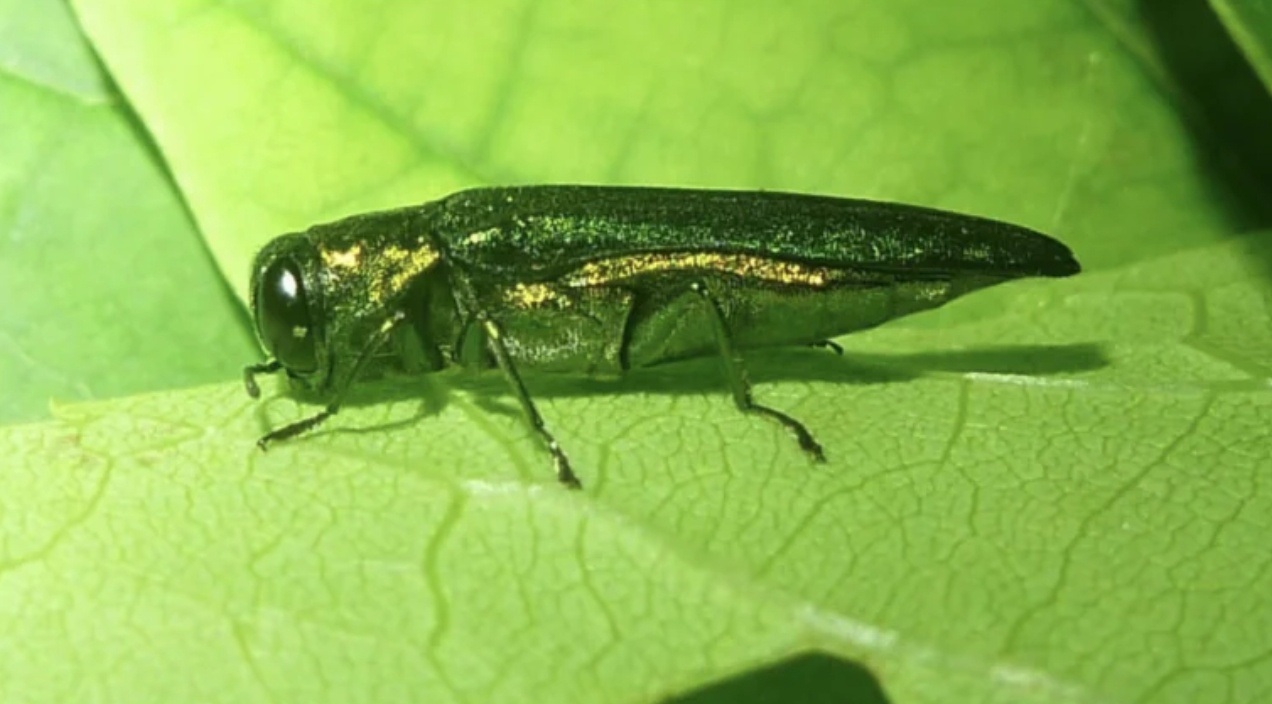
 

Agrilus planipennis
Hungary: the first confirmed detection in the EU
One adult was captured on 9 June 2026 in a trap operated by the University of Sopron – Forest Research Institute in Beregsurány, Hungary.

The Nébih Plant Health Diagnostic National Reference Laboratory confirmed the identification on 24 June using molecular, PCR-based diagnostic methods.
The notification identifies A. planipennis as a Union priority quarantine pest. It is also listed in Annex II A of the EU plant-health legislation and on the EPPO A2 list.
Additional field inspections, supplementary traps and targeted surveys of ash trees (Fraxinus spp.) have been initiated in Hungary. Preliminary observations near the detection site found tree symptoms consistent with infestation, and further delimitation is under way. The source of the finding is unknown.
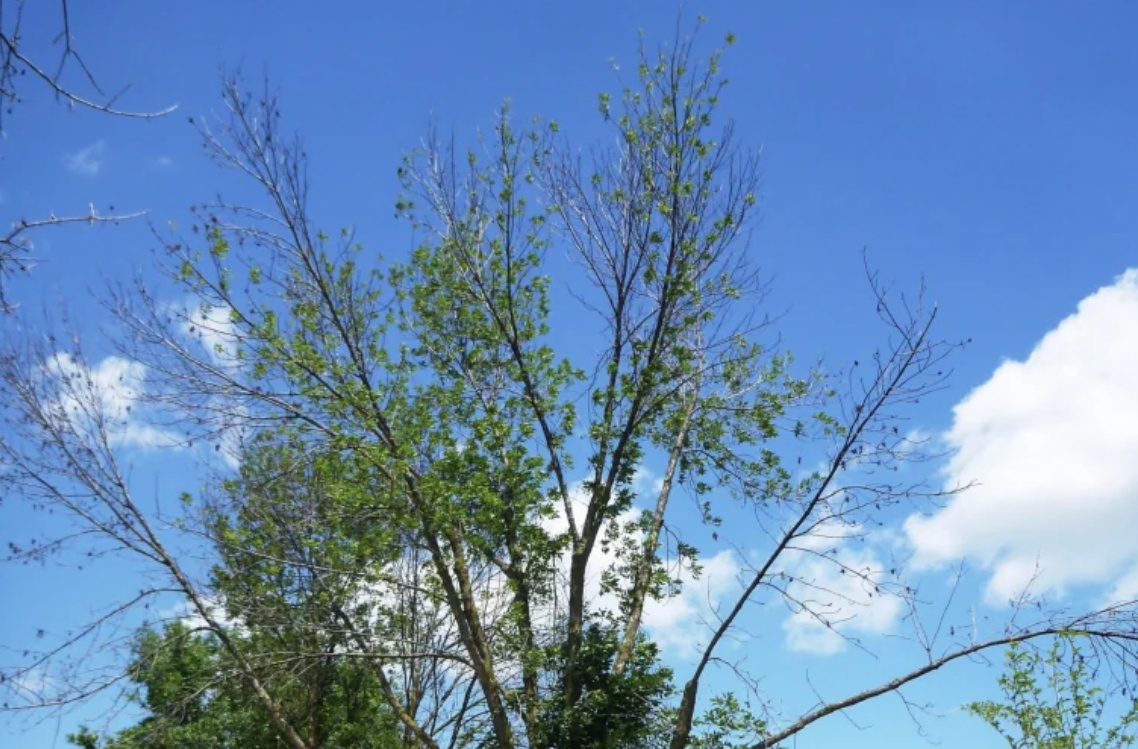
The infestation initially becomes apparent in the upper parts of the tree crown.
Slovakia: confirmation by the EU reference laboratory is pending
In Slovakia, the first sample was taken on 25 June 2026 from a funnel trap on an ash tree in a park at Streda nad Bodrogom, Trebišov district. Eighteen adults were found.
An accredited Slovak laboratory identified the specimens by stereomicroscopy, and four adults were sent to the European Union Reference Laboratory in France for confirmation.
A second positive sample was collected from the same trap on 7 July. Ten additional traps have been deployed around the site. The Slovak notification nevertheless continues to classify the presence as suspected while the reference-laboratory result is pending. The two reports mark a significant development in the surveillance of this priority quarantine pest at the European Union’s eastern border.

Sources: Official notifications submitted by Hungary (29 June 2026) and Slovakia (13 July 2026) to the European Commission and other EU Member States.

Project HIVE 101187384. Funded by the European Union. Views and opinions expressed are however those of the author(s) only and do not necessarily reflect those of the European Union or the European Research Executive Agency. Neither the European Union nor the granting authority can be held responsible for them.