

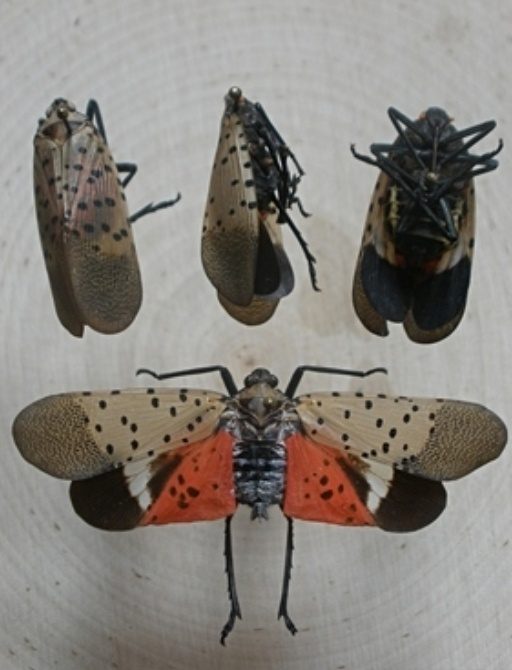
The invasive spotted lanternfly (Lycorma delicatula) has been detected for the first time in the Republic of Moldova. Following the confirmed finding in Chișinău, the International Plant Protection Convention (IPPC) has issued a pest alert for this emerging pest of global concern.
The presence of L. delicatula was laboratory-confirmed on 14 August 2026 and officially reported to the IPPC Secretariat by Moldova’s National Food Safety Agency on 21 August.
Both adults and nymphs were found in the Rîșcani District of Chișinău Municipality, on spontaneous vegetation and particularly on tree of heaven (Ailanthus altissima).
Moldova’s National Plant Protection Organization has classified the occurrence of L. delicatula as transient. The IPPC issued its pest alert on 26 August 2026 and provides further information on the detection and phytosanitary measures being implemented in Moldova.
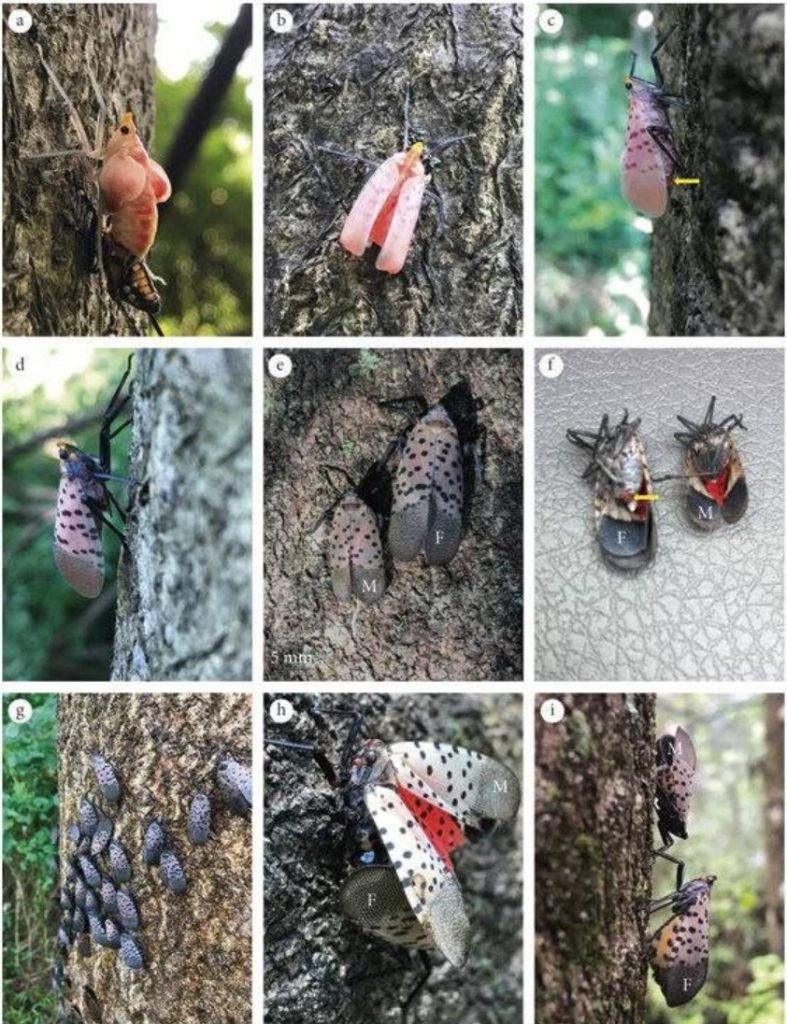
The association with tree of heaven is particularly noteworthy. A 2022 study from Pennsylvania, where spotted lanternfly has been present since 2014, describes A. altissima as a primary host for both nymphs and adults and highlights its importance in the species’ population dynamics. The study found that adults strongly congregated on tree of heaven, particularly on the lower and middle parts of the trunk.
At the same time, spotted lanternfly is highly polyphagous. The study notes that it also feeds on grapevines and more than 100 other plant and tree species, meaning that its host range extends well beyond tree of heaven.
This combination of impacts is well known from North America, where the species has been established for more than a decade. Andrew M. Liebhold, Chief Scientist at FISC, points to the contradictory nature of the invasion: “The spotted lanternfly amplifies many of the contradictions we often see with biological invasions. On the one hand, it feeds on tree of heaven, which is an aggressive invasive tree, and from that perspective this can be considered beneficial. But there are many undesirable aspects of this species that outweigh its positive impacts. In addition to damaging grapevines and certain native tree species, this insect has become a major nuisance for residents of eastern North America, where it has established. The adults are large, can become very numerous, and may disrupt outdoor activities such as dining, picnics, and sports. Many people have become very frustrated by these insects.”
Sources:
IPPC: Pest alert – International Plant Protection Convention
, , Spatial Distribution, Seasonal Dynamics, and Sex Ratio of Lycorma delicatula (Hemiptera: Fulgoridae) Adults on Tree of Heaven, Psyche: A Journal of Entomology, 2022, 4775718, 10 pages, 2022. https://doi.org/10.1155/2022/4775718
Project HIVE 101187384. Funded by the European Union. Views and opinions expressed are however those of the author(s) only and do not necessarily reflect those of the European Union or the European Research Executive Agency. Neither the European Union nor the granting authority can be held responsible for them.